

WOMEN WHO WALK THE WALK: The Women Changing Sneaker Culture
Sneakers are more than something we wear. They shape how we move, compete, express ourselves, and increasingly, spend. For decades, sneaker culture has been shaped by sports, athletes, music, fashion, and community, yet the business around it has long been dominated by men. Today, a remarkable group of women is changing that story. They are not simply wearing the shoes, endorsing the shoes, or appearing in campaigns for the shoes. They are designing them, building the companies, creating the retail experiences, and developing the communities that are helping determine where sneaker culture goes next.
The timing could not be more important. Women wield enormous influence at retail. Circana reported in 2025 that female consumers accounted for 59% of U.S. discretionary general merchandise spending, demonstrating the tremendous economic influence women bring to the marketplace. The lesson for brands is increasingly clear: women cannot be treated as an afterthought in product development, marketing, or investment. We are a critical part of the marketplace, and our purchasing decisions help determine which companies, products, and ideas succeed.
That buying power is intersecting with another extraordinary economic story: the continued rise of women’s sports. Audiences are growing, investment is increasing, and brands are recognizing the commercial opportunity surrounding female athletes and their fans. For THIS IS IT NETWORK™, that creates an important conversation that extends beyond what happens on the court, track, or field. We also want to celebrate the women building businesses, products, communities, and culture around sports.
That is why THIS IS IT NETWORK™ is celebrating these remarkable women who aren’t simply participating in sneaker culture. They are claiming ownership within it.
THE ATHLETE: ALLYSON FELIX / SAYSH
Olympic champion Allyson Felix turned advocacy into entrepreneurship when she co-founded Saysh with her brother and business partner, Wes Felix. After experiencing firsthand an athletic footwear industry that she believed did not adequately consider women’s needs, Felix helped create a company committed to designing performance and lifestyle footwear specifically for women.
Saysh approaches footwear through the contours and biomechanics of women’s feet rather than simply adapting a shoe originally developed around men. That distinction is important. Felix’s journey demonstrates that athletes can be more than endorsers and ambassadors for existing companies. They can become founders, owners, innovators, and architects of something better.
THE BASKETBALL INNOVATOR: NATALIE WHITE / MOOLAH KICKS
Natalie White recognized a glaring gap in one of the world’s most sneaker-driven sports: female basketball players were routinely choosing among footwear that had not been created specifically for them. She founded Moolah Kicks in New York City in 2020 to help change that reality.
Moolah Kicks has built its identity specifically around women’s basketball, developing footwear engineered around the female foot and informed by the needs of women who actually play the game. White’s story demonstrates what can happen when women stop accepting products that have simply been resized or remarketed to them and instead create products around women’s actual experiences and needs.
THE SNEAKER DESIGNER: SARAH SUKUMARAN / LILITH NYC
Queens native Sarah Sukumaran brings another important perspective to the movement through Lilith NYC, the footwear and lifestyle brand she founded from a lifelong love of sneakers and sneaker culture.
The daughter of Tamil refugees, Sukumaran has built a brand influenced by Queens, her heritage, femininity, and communities historically overlooked within sneaker culture. Her professional experience in the footwear industry gave her a front-row view of who was being designed for and whose perspectives were missing.
Lilith NYC demonstrates that representation is not simply about who appears in an advertisement. It is also about who sits at the design table, who creates the product, who makes the decisions, and whose experiences are reflected in the story behind it.
THE INCLUSIVE INNOVATOR: BRITTNEY PERRY / PERRYCO
For Brittney Perry, sneaker design became an opportunity to challenge another long-standing convention within footwear: the idea that shoes need to be defined by gender. Perry founded PerryCo Shoes with an approach centered on versatile, genderless footwear and accessories that allow consumers to express themselves beyond traditional labels.
As a Black woman building an independent footwear company, Perry brings an important perspective to sneaker culture. Her work demonstrates that innovation is not always about creating more categories. Sometimes it is about removing unnecessary boundaries altogether.
PerryCo also represents something we believe deserves more attention: the independent woman founder. Building a footwear brand requires far more than a great design. It requires manufacturing, sourcing, marketing, distribution, financing, community building, and persistence. Perry’s place in this conversation reminds us that women deserve ownership throughout the industry — as founders, designers, decision-makers, and entrepreneurs.
THE ENTREPRENEUR: SARA BLAKELY / SNEEX
Sara Blakely built her entrepreneurial career around identifying everyday problems women were expected to tolerate and asking a deceptively simple question: Why?
With SNEEX, Blakely has brought that same problem-solving mentality to footwear. The company has reimagined the traditional high heel by combining elements associated with sneakers and heels, with an emphasis on addressing many of the comfort challenges women have long experienced with traditional heels.
SNEEX is another example of what becomes possible when women have the resources, influence, and freedom to design solutions based on women’s lived experiences. Instead of asking women to adjust to an existing product, the entrepreneur can rethink the product itself.
THE CULTURE: ANGELA + VANESSA SIMMONS / PASTRY
Angela and Vanessa Simmons recognized early that sneakers existed at the intersection of fashion, entertainment, dance, and popular culture. Through Pastry, the sisters helped build a footwear identity that spoke directly to young women who wanted sneakers to be expressive, fashionable, and connected to culture.
Their presence in this conversation matters because sneaker culture has never been defined exclusively on the basketball court or running track. It lives in music, dance, street style, entertainment, and the everyday choices women make about how they want to show up in the world.
Angela and Vanessa demonstrated early on that young women were not simply a secondary market for sneaker culture. They were consumers, tastemakers, influencers, and community builders who could shape the culture themselves. Pastry Shoes, founded by Angela and Vanessa Simmons, is still alive and active as a specialty performance brand for professional and collegiate dance teams, managed under the Vida Group
THE RETAIL + COMMUNITY BUILDERS: ABBY ALBINO + SHELBY WEAVER / MAKEWAY
Building great products is only part of the sneaker economy. Women also deserve spaces where they feel welcome buying, discovering, discussing, and celebrating them. Abby Albino and Shelby Weaver created Makeway specifically to address that opportunity.
Makeway describes itself as North America’s first and only sneaker boutique for women, completely run and funded by women. But what makes the business especially interesting is the founders’ commitment to creating more than a retail destination. They have worked to build an inclusive community around women, sneakers, sports, and culture.
With Albino’s background in sports and entertainment marketing and Weaver’s work within basketball and community development, Makeway represents the powerful intersection of retail, women’s sports, culture, commerce, and community. It also demonstrates why women need ownership not only of the products being sold, but also of the spaces and experiences where purchasing decisions are made.
THE SNEAKER RETAIL PIONEER: JENNIFER FORD / PREMIUM GOODS
Long before today’s surge of attention surrounding women in sneaker culture, Jennifer Ford was establishing her place within the industry. In 2004, Ford brought Premium Goods to Houston, building an independent sneaker destination with deep connections to the city’s culture.
As a Black woman business owner operating in an industry where women — and particularly women of color — were underrepresented in positions of ownership, Ford built a destination that extended beyond footwear to connect fashion, music, art, storytelling, and community.
More than two decades later, her longevity provides an important reminder: women have not suddenly arrived in sneaker culture. Women like Jennifer Ford have been building within it for years.
REPRESENTATION IS IMPORTANT. OWNERSHIP IS POWERFUL.
Collectively, these women demonstrate why representation and ownership must exist together. Seeing women in advertising matters. Seeing women athletes secure sponsorships and signature products matters. Seeing women represented in sneaker campaigns matters.
But there is another level of progress when women own the company, design the product, negotiate the partnership, operate the store, employ the team, and participate in the economic upside created by the communities they serve.
Ownership gives women the ability to determine which problems get solved, which products get made, which stories get told, which communities receive investment, and where the money ultimately goes.
And that is where our buying power enters the conversation.
OUR BUYING POWER MATTERS
Every purchase may feel like an individual transaction, but collectively our spending becomes a powerful signal.
When we intentionally discover women-founded brands, shop women-owned businesses, attend women’s sporting events, purchase women’s sports merchandise, and support companies that genuinely invest in women, we communicate something important to the marketplace:
There is demand here.
The commercial opportunity surrounding women’s sports reinforces that point. McKinsey research has found that avid women’s sports fans spend 2.5 times more than casual women’s sports fans across tickets, team merchandise, and products from brands sponsoring their favorite teams and athletes. Its research also found that avid women’s sports fans are 27% more likely to purchase from a brand that endorses a popular woman athlete.
Women are not simply an audience to be reached. We are consumers to be respected, communities to be invested in, and entrepreneurs capable of owning a meaningful portion of the marketplace.
That means supporting women-owned businesses cannot end with celebrating a founder on social media. We must also consider where we spend. Discover the brand. Visit the website. Follow the founder. Share the product. Make the introduction. Buy when the product meets your needs. Recommend it to a friend. These seemingly small decisions, multiplied across communities, create economic impact.
WOMEN WHO WALK THE WALK
At THIS IS IT NETWORK™, we believe conversations lead to connections, connections create community, and community can drive commerce. As women’s sports continue their remarkable growth, we want to pay attention not only to the women scoring the points, breaking the records, and winning the championships, but also to the women building businesses around this growing ecosystem.
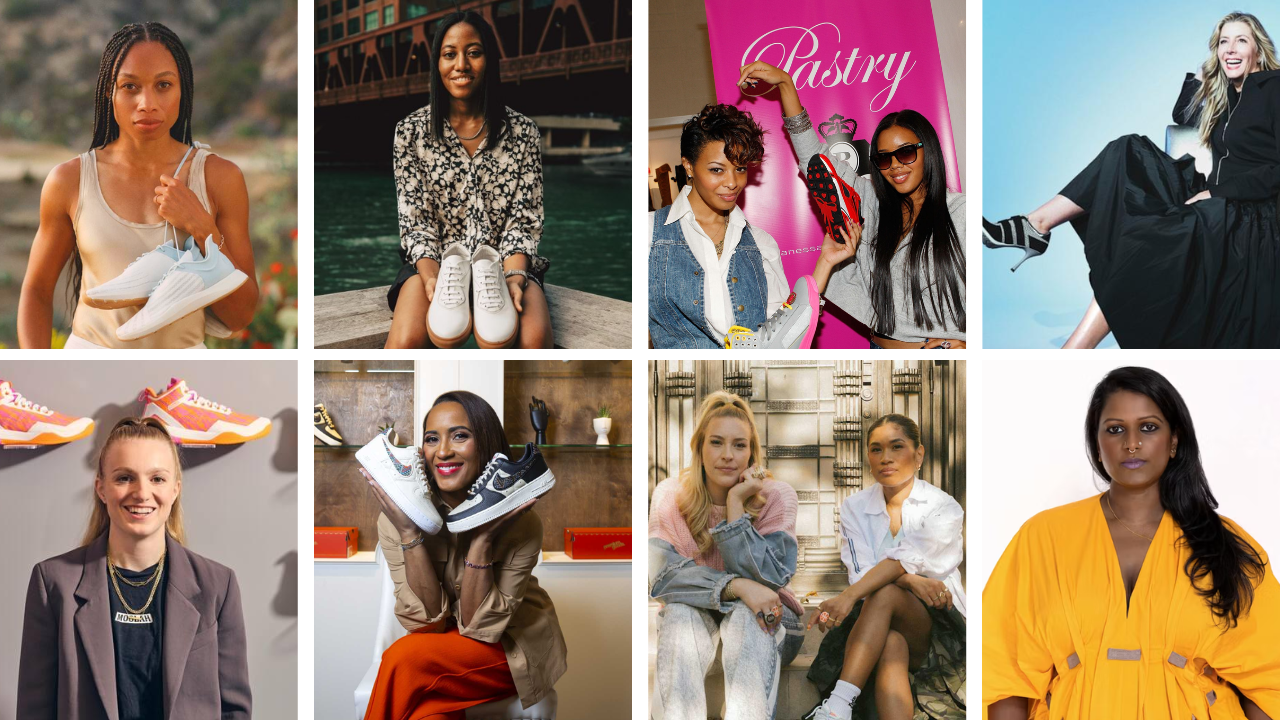
Allyson Felix. Natalie White. Sarah Sukumaran. Brittney Perry. Sara Blakely. Angela and Vanessa Simmons. Abby Albino and Shelby Weaver. Jennifer Ford.
These women represent different generations, backgrounds, business models, and corners of the sneaker industry, but collectively they are demonstrating something powerful.
Women aren’t simply walking in the shoes anymore. We’re designing them. We’re building them. We’re selling them. We’re creating the culture around them. And we have the buying power to support the women who own them. That is how we WALK THE WALK.